

Dietary restrictions and allergen info at Petaling Jaya cafes
By Lee Kins · Updated 2026-07-25
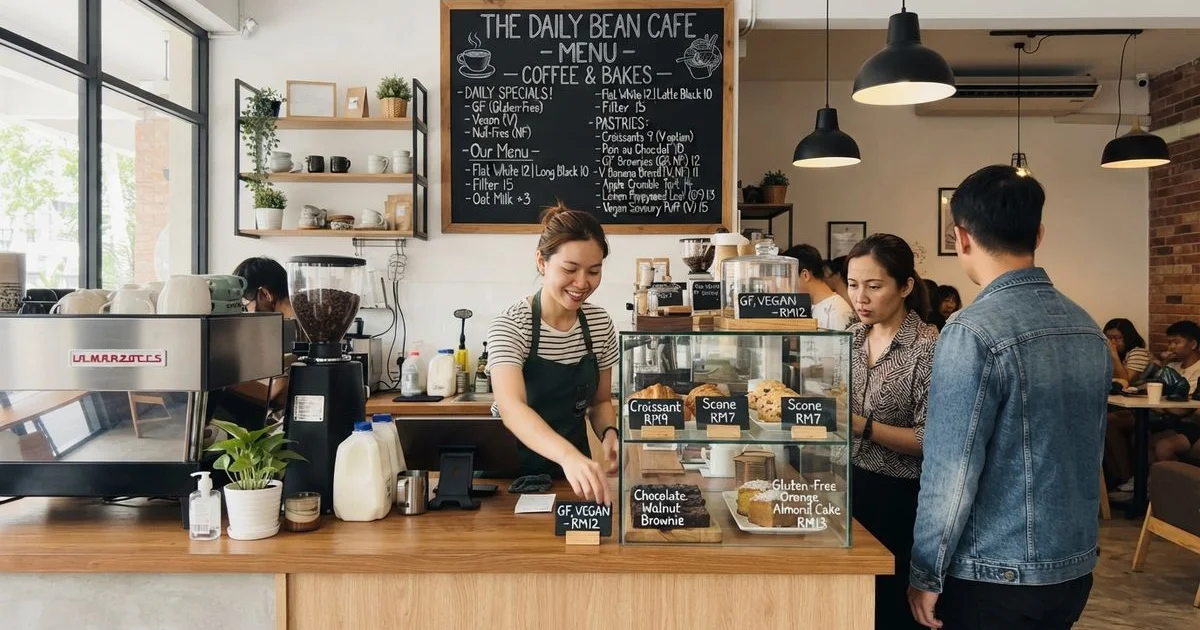
The gap between a menu and what’s actually in the kitchen
A printed menu tells you what a dish is called, not necessarily what’s in it or how it’s prepared. For most diners that’s not an issue. For anyone managing an allergy, a vegan or vegetarian diet, or another dietary restriction, that gap matters, and it’s worth a slightly different approach to ordering than just reading the menu and picking something that sounds safe.
This is general guidance for navigating dietary needs when dining out. It is not medical advice. If you manage a serious allergy, follow the guidance of your doctor or allergist and always confirm directly with the cafe before ordering.
What tends to be straightforward, and what doesn’t
Coffee and tea. Generally low-risk from an allergen standpoint, though milk alternatives and flavoured syrups can introduce ingredients worth checking if dairy or specific additives are a concern.
Bakery items. Often the trickiest category. Shared equipment, cross-contact between nut-based and nut-free items, and gluten-containing ingredients are common in a bakery kitchen, even when a specific item looks safe.
Brunch and all-day dining plates. More components means more places for an allergen to hide, from a sauce to a garnish. These dishes are usually worth a direct question rather than an assumption based on the dish name.
Vegan and vegetarian options. Coffee-first cafes handle this reasonably well since drinks are naturally flexible. Food menus vary a lot: some cafes have a clearly marked vegetarian section, others require asking which dishes can be adapted.
Questions worth asking, by concern
| Dietary concern | What to ask |
|---|---|
| Nut allergy | Is this prepared in a space that also handles nuts, and can it be made separately? |
| Gluten sensitivity | Is this dish gluten-free by ingredients, or also free of cross-contact during prep? |
| Vegan diet | Does this contain dairy, eggs, or honey, and can substitutions be made? |
| Dairy allergy or lactose intolerance | Is a non-dairy milk available, and is it used in a shared jug or steamed separately? |
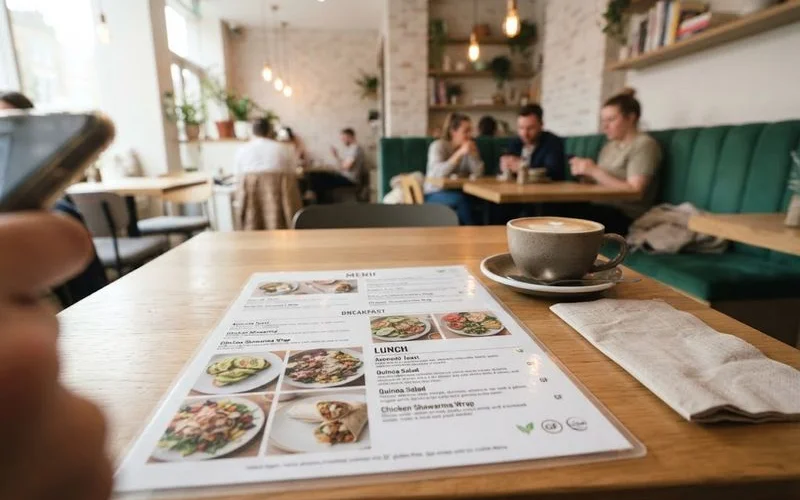
A practical approach for your next visit
- Message or call ahead for anything serious, rather than asking under time pressure once you’re seated with a group waiting.
- Ask about preparation, not just ingredients, since cross-contact in a small kitchen is often the bigger risk than the dish’s listed ingredients.
- Check recent reviews for mentions of your specific concern before committing to a cafe for an important visit, since other diners with similar needs sometimes leave useful notes.
- Have a backup plan. If a cafe can’t confidently answer your question, it’s reasonable to choose somewhere else rather than take an unnecessary risk.
- Carry any medication you’d normally carry, regardless of how confident the cafe sounds, if you manage a serious allergy.
Which cafe categories tend to be easier or harder
Category is a rough but useful signal before you even open a menu. Specialty coffee and roastery cafes tend to be the most straightforward for drink-based restrictions, since non-dairy milk options are common and the food menu, if there is one, is usually simple. Bakery and dessert cafes are often the hardest for allergy management specifically, given how much shared equipment and cross-contact is typical in baking. Brunch and all-day dining cafes sit in the middle: bigger menus mean more options, but also more components per dish to check. Tea houses tend to have simpler food menus overall, which can actually make it easier to get a clear answer about what’s in a specific item, even if the range of choices is smaller.
None of this replaces asking directly, but it’s a reasonable way to set expectations before you even walk in, particularly if you’re choosing between a few options for a group with mixed dietary needs.
Where our directory can help, and where it can’t
Browsing the full directory and reading recent reviews can surface useful signals, like a cafe frequently praised for accommodating dietary needs or one where inconsistent food quality is a recurring complaint. What it can’t do is confirm a specific dish’s current ingredients or kitchen practices on the day you visit. That confirmation always needs to come directly from the cafe. For food safety more broadly rather than a specific allergen, our guide to Malaysia’s cafe hygiene grading system explains what that separate rating actually covers. Our methodology page explains how we build ratings from review data generally.
Bottom line
Menus are a starting point, not a full answer, for anyone managing a dietary restriction. Ask about preparation as well as ingredients, message ahead for anything serious, and treat a cafe’s answer as their best current information rather than an absolute guarantee. A short conversation before you order is the most reliable step available.
FAQ
- Do PJ cafes usually list allergens on the menu?
- Some do, especially larger or newer cafes, but it isn't universal. Smaller independent cafes often rely on staff knowledge rather than printed allergen labels, so asking directly is usually more reliable than the menu alone.
- Is it easy to find vegan or vegetarian options at a typical cafe?
- Coffee and tea are usually fine as-is, but food menus vary widely. Bakery and brunch-focused cafes are more likely to have a clearly marked vegetarian item than a menu built mainly around meat-based brunch plates.
- Can I trust that a dish is nut-free if a cafe says so?
- Take it as their best information, not a guarantee against cross-contact, especially in a small kitchen. If a reaction would be serious, it's worth confirming preparation details specifically rather than accepting a general yes.
- What's the best way to ask about dietary needs without disrupting a group visit?
- Message or call ahead if possible, especially for a group booking. It gives the kitchen time to check ingredients properly rather than answering quickly under pressure during a busy service.