

Brewing specialty coffee at home vs buying it out in Petaling Jaya
By Lee Kins · Updated 2026-07-13
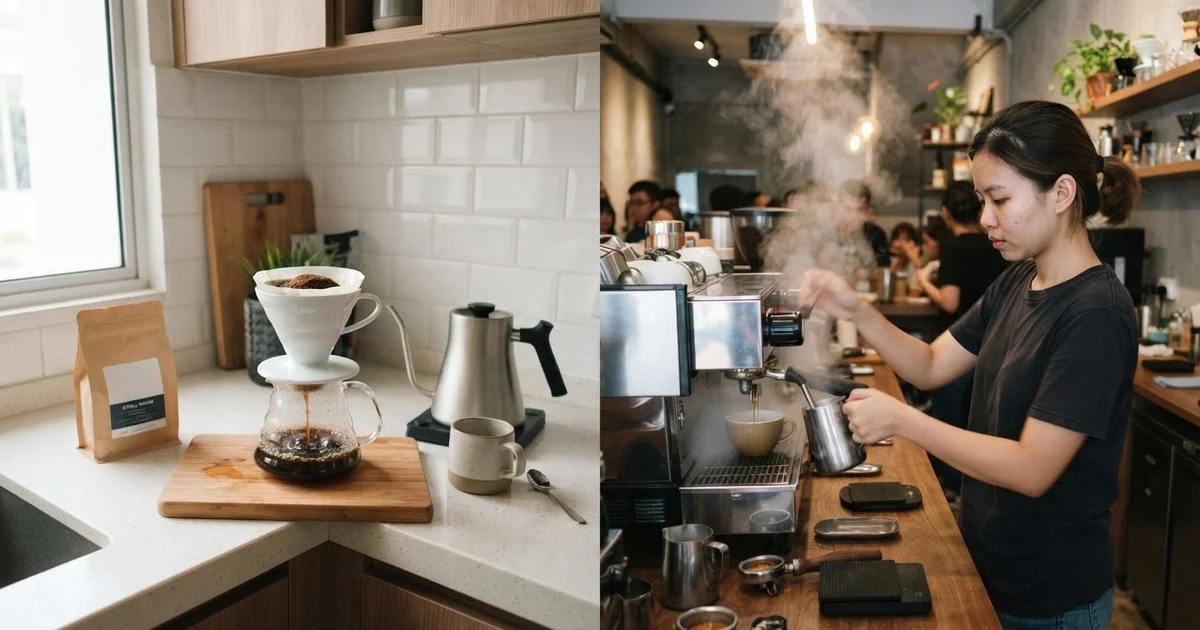
Two different things you’re actually paying for
“Home brew vs cafe” sounds like a simple cost question, but it’s really two separate decisions bundled together: what you’re paying for the coffee itself, and what you’re paying for the cafe experience around it. Petaling Jaya’s specialty coffee and roastery hub tracks 372 cafes in this category alone, which means there’s no shortage of good beans and no shortage of good reasons to sit in one of these places anyway.
This guide separates the two questions so you can decide with your actual habits in mind, not just the receipt.
The cost side, cup by cup
At a typical PJ specialty cafe, a cup runs somewhere in the RM10 to RM16 range depending on the drink and the venue. Brewing at home with roasted beans from a local cafe or roastery costs meaningfully less per cup once you own basic gear, because you’re only paying for beans, not rent, staff, and the cup itself.
Rough monthly cost, seven cups a week
| Bean grade at home | Weekly cost brewing at home | Weekly cost buying out (RM12/cup) | Approximate monthly saving |
|---|---|---|---|
| House blend beans | RM50-60 | RM84 | RM100-140 |
| Single-origin beans | RM75-90 | RM84 | RM0-40 |
The single-origin column narrows fast because premium beans cost more per cup even brewed at home, but it rarely flips negative unless you’re buying very expensive micro-lots.
What buying out gets you that brewing at home doesn’t
Cost isn’t the whole story, and it would be a mistake to treat this purely as a savings calculation:
- Espresso-based drinks. Matching a cafe’s espresso, milk texture, and consistency at home requires real equipment and practice. This is the category where buying out still wins for most people.
- Bean discovery. Trying a new origin or roast by the cup before committing to a whole bag is a genuine service a cafe provides that home brewing can’t replicate.
- The space itself. A specialty cafe is also a place to sit, work, or meet someone. If that’s what you’re actually paying for, comparing it purely on coffee cost misses the point.
What home brewing gets you that buying out doesn’t
- Lower cost per cup at any real frequency, especially with house-blend or mid-range beans.
- Control over strength, ratio, and brew method, which matters if you have specific preferences a standard cafe menu doesn’t accommodate.
- No queue, no peak-hour wait. Slow service during busy periods is a recurring theme in cafe feedback across PJ, and brewing at home sidesteps it entirely.
What it takes to brew well at home
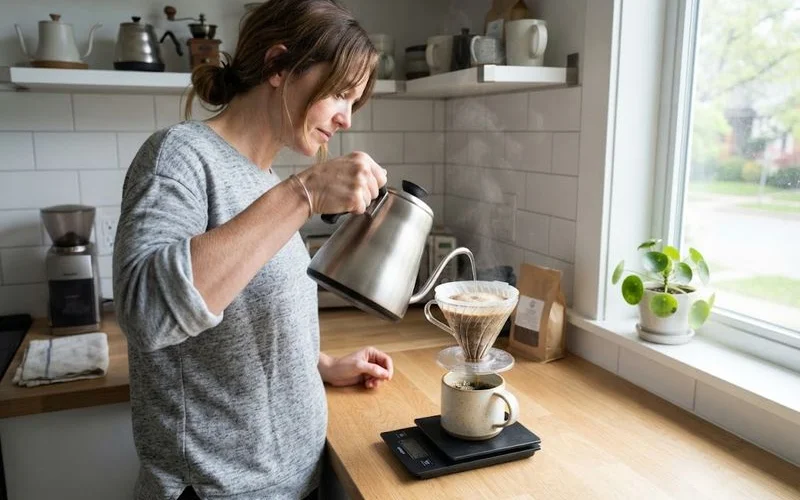
Getting close to cafe quality at home doesn’t require a huge setup, but it does need more than instant coffee and a kettle. A decent burr grinder matters more than any other single piece of equipment, since inconsistent grind size is the most common reason home coffee tastes worse than a cafe’s version. Beyond that, a simple pour-over dripper or a French press is enough to get good results with fresh beans. Fresh is the operative word: beans lose flavour within a few weeks of roasting, so buying smaller amounts more often from a local roastery beats a large bag that sits around losing its edge.
Water quality and ratio matter too, more than most people expect starting out. A basic kitchen scale to measure beans and water by weight, rather than eyeballing it, closes a lot of the quality gap between a careful home brew and a specialty cafe’s cup.
A reasonable middle ground
Most regular coffee drinkers land somewhere between the two extremes rather than picking one exclusively. A common pattern: brew simple cups at home on weekday mornings, and save cafe visits for espresso drinks, weekend catch-ups, or trying beans from a new roastery before buying a bag. This keeps the daily cost down without giving up what a good cafe actually offers beyond the coffee itself. When you do want to buy out, our guide on how to choose a cafe in Petaling Jaya walks through matching category to occasion so you’re not defaulting to the same spot every time.
If you want to compare specific roasteries before buying beans in bulk, browse the wider directory to see how these cafes compare on rating and recent reviews, or check our methodology page for how those scores are built.
Bottom line
If you drink coffee daily and mostly want a straightforward cup, home brewing with house-blend beans is the cheaper habit by a wide margin. If espresso drinks, trying new origins, or the cafe environment itself are part of what you’re actually after, the cost gap narrows or stops mattering. The honest answer for most people isn’t “switch entirely” but “brew at home for the routine cups, buy out for the ones that need a machine or a room.”
FAQ
- Is brewing coffee at home actually cheaper than buying from a cafe?
- Usually yes if you drink coffee daily. A cup brewed from house-blend beans typically costs a fraction of a cafe cup, so the savings grow with how often you'd otherwise be buying out.
- Do single-origin beans wipe out the savings?
- They narrow the gap but rarely erase it. Single-origin beans cost more than house blends, but home brewing is still usually cheaper per cup than a specialty cafe's price for the same origin.
- Can home brewing match a specialty cafe's quality?
- With the right grinder, fresh beans, and a consistent method, yes for many brew styles. Espresso-based drinks are the hardest to match at home because of the equipment involved.
- Should I switch entirely to home brewing?
- Not necessarily. Many people mix both: home brewing for daily cups and cafe visits for espresso drinks, socialising, or trying beans before buying a bag.